Xander Becker · 13 September 2026
How Bryophyte Communities Influence Insect Migration Pathways in Temperate Regions
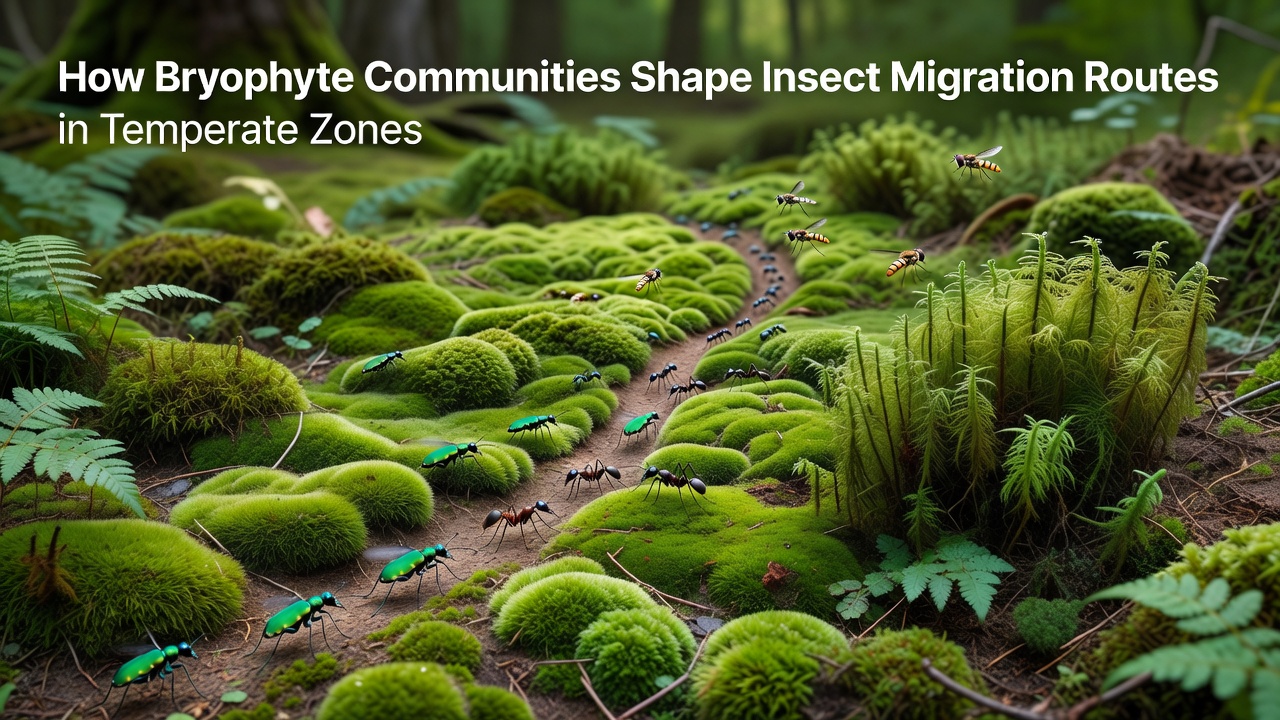
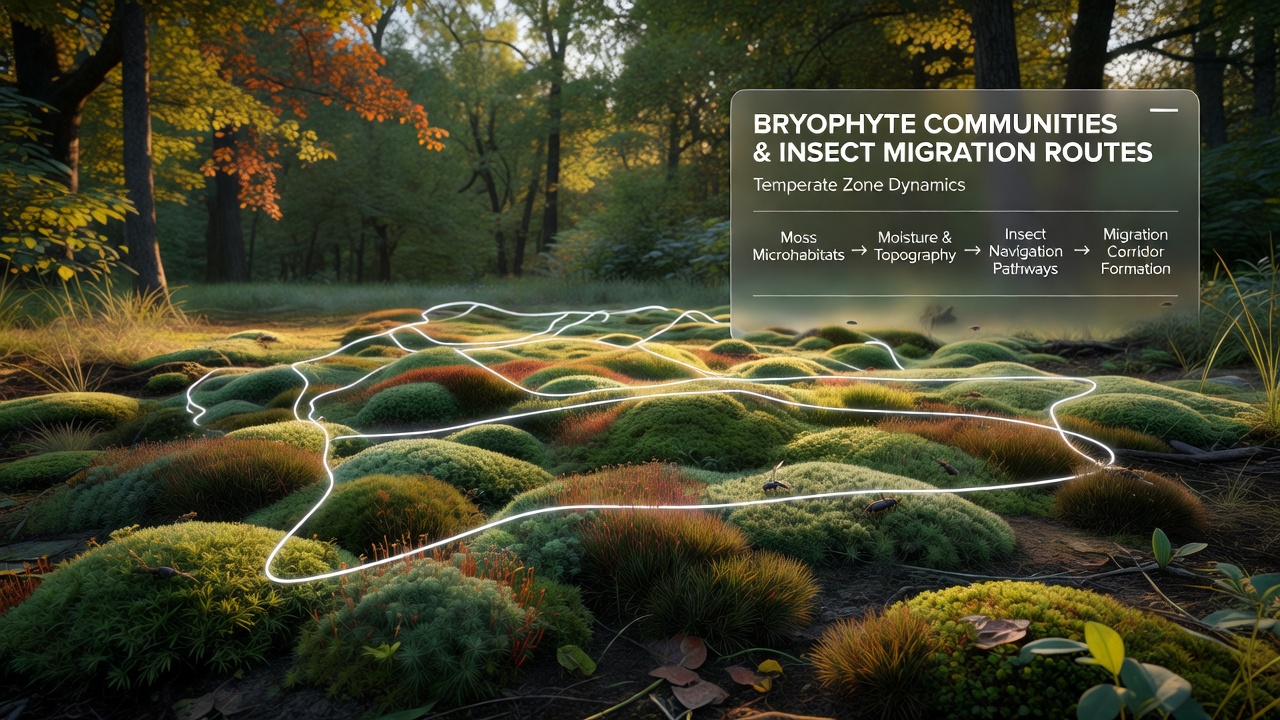
Bryophyte communities consisting of mosses, liverworts, and hornworts establish dense ground layers across temperate forests, wetlands, and grasslands, and these layers create specific moisture gradients along with sheltered microclimates that guide the movement of various insect species during seasonal migrations. Researchers tracking species such as monarch butterflies and certain moth populations have documented how these non-vascular plants alter local humidity levels and surface textures, which in turn affect flight paths and resting sites. Data collected over multiple field seasons show that bryophyte patches often form linear corridors where temperature fluctuations remain minimal compared to surrounding bare soil or grass areas.
Bryophyte Distribution Patterns in Temperate Landscapes
Temperate zones spanning North America, Europe, and parts of East Asia feature distinct bryophyte assemblages that respond to seasonal rainfall cycles and soil conditions, and observers note that species like Sphagnum and Polytrichum dominate wetter depressions while others colonize drier rocky outcrops. These distribution patterns create predictable networks that align with established insect routes, because the plants retain water during dry spells and release it gradually through evaporation, maintaining higher ambient moisture along migration corridors. Studies conducted by teams at institutions in Canada and Scandinavia indicate that areas with continuous bryophyte cover experience up to thirty percent less wind desiccation at ground level than adjacent habitats lacking such vegetation.
Mechanisms Linking Bryophytes to Insect Navigation
Insects rely on a combination of visual cues, chemical signals, and microclimatic conditions when selecting paths through temperate environments, and bryophyte surfaces contribute volatile organic compounds that certain species detect during low-altitude flight segments. The spongy texture of many moss mats also provides stable perches where butterflies and beetles can thermoregulate without excessive energy loss, and this stability becomes particularly relevant during cooler autumn movements. Evidence from long-term monitoring programs reveals that routes passing through bryophyte-rich zones coincide with higher survival rates for larvae that drop from host plants, since the dense mats offer protection from predators and desiccation stress.
Case Examples from Field Observations
One long-term project in the Appalachian region documented how expanding bryophyte coverage after selective logging altered the trajectory of migrating leafhoppers, shifting their preferred valleys toward slopes with heavier moss growth. Similar patterns emerged in central European meadows where researchers mapped liverwort colonies along riverbanks and found these colonies matched the primary stopover points for several damselfly species. Data gathered through radio telemetry and pitfall traps confirm that insects adjust headings when encountering bryophyte boundaries, often following the edges rather than crossing open terrain. Such adjustments reduce exposure to sudden temperature drops that occur in early evening hours across temperate latitudes.
Interactions with Climate Variables and Seasonal Timing
Temperature and precipitation trends influence both bryophyte expansion rates and the timing of insect departures from breeding grounds, and models incorporating satellite imagery of vegetation cover predict that shifts in bryophyte extent will modify future migration corridors by 2030. In September 2026, several coordinated international surveys plan to release comparative datasets from temperate sites in the Pacific Northwest and the Baltic region that will clarify how recent wetter summers have expanded moss coverage in upland areas. These expansions appear to create additional stepping-stone habitats that shorten the distances insects must travel between major resource patches, thereby conserving energy reserves needed for longer flights. Observers have recorded increased densities of ground-foraging insects within newly colonized bryophyte patches during late-season movements, suggesting direct benefits from the altered microhabitats.
Broader Ecological Implications and Ongoing Research
Bryophyte communities also interact with vascular plants to shape overall vegetation structure, which indirectly channels larger insect migrations through corridors of suitable humidity and shelter, and this layered effect becomes evident when comparing migration success across landscapes with varying moss coverage. Research institutions in Australia and New Zealand have contributed comparative studies on analogous systems in southern temperate zones, highlighting consistent mechanisms despite differences in species composition. Continued monitoring through citizen science networks and automated sensors provides accumulating records that support refinement of predictive models used by conservation planners. Those who analyze these datasets note that protecting existing bryophyte mats preserves functional connectivity for multiple insect taxa simultaneously.
Conclusion
Overall, bryophyte communities exert measurable influence on insect migration routes in temperate zones through moisture retention, chemical signaling, and structural guidance, and the patterns documented across multiple continents demonstrate consistent ecological linkages. Future data releases scheduled for September 2026 will further quantify these relationships under changing climatic conditions, while existing evidence from field studies already informs habitat management strategies aimed at maintaining functional migration networks.