Jordan Lang · 27 September 2026
Patterns of Spore Dispersal in Moss Species Adapted to High-Altitude Environments
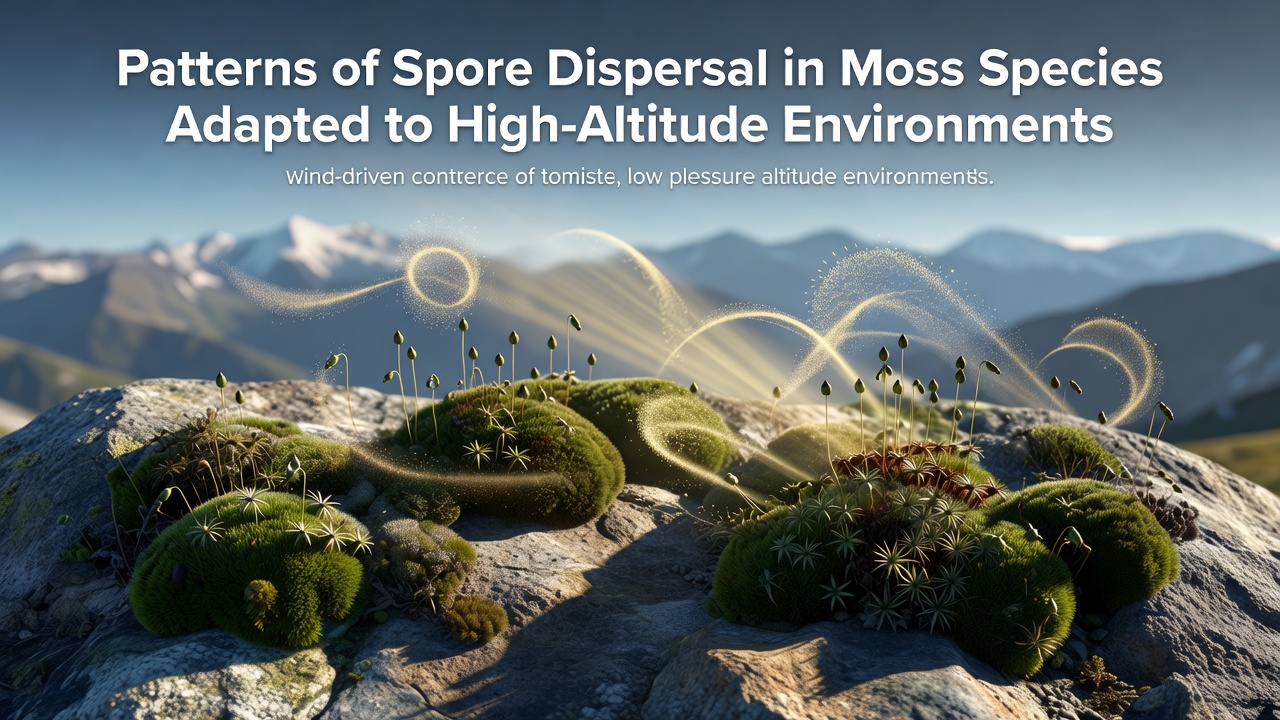
High-altitude moss species demonstrate specialized spore dispersal patterns shaped by thin air, intense solar radiation, and frequent wind gusts that dominate alpine and subalpine zones, and researchers have documented how these conditions select for particular release timings adn spore morphologies across multiple continents. Data from field stations in the Rocky Mountains and the Andes show that many species synchronize capsule dehiscence with afternoon thermal updrafts, which carry spores higher into the atmosphere before they descend, and this timing increases the likelihood of long-distance transport while reducing local competition.
Spore size tends to be smaller in species found above 3,000 meters, because reduced atmospheric density allows lighter particles to remain airborne longer, yet the same thin air increases desiccation risk so capsules often feature reinforced walls and opercula that open only under specific humidity thresholds. Studies conducted by teams at the University of British Columbia indicate that certain Polytrichum populations at elevation produce spores with enhanced UV-protective pigments, and these compounds maintain viability during prolonged exposure to intense light at altitude.
Wind and Elevation Interactions
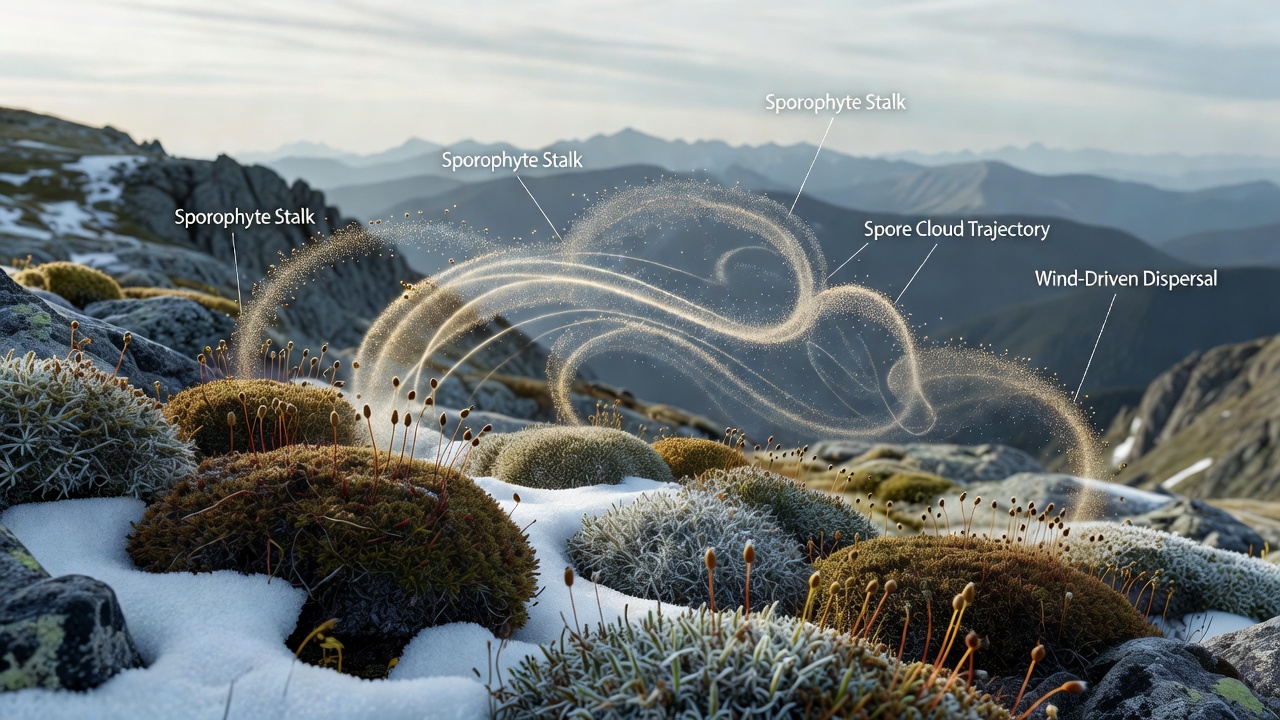
Wind speed increases with elevation while air density drops, creating conditions where even modest gusts generate substantial lift for spores, and observers note that many high-altitude mosses orient their setae to align wth prevailing wind directions rather than random growth patterns. This alignment results in directional dispersal that follows mountain ridges and valleys, and telemetry data collected during the 2024 field season confirmed that spores from Grimmia species traveled up to 12 kilometers in a single event when released into katabatic winds.
Yet turbulence near rocky outcrops can also cause rapid deposition, so some species have evolved staggered capsule maturation within a single colony to spread release events across several days and improve overall success rates. Environmental sensors deployed in the Sierra Nevada have recorded that spore clouds often form distinct plumes that follow lee-side eddies, and these patterns allow spores to settle in sheltered microsites where moisture persists longer.
Seasonal Timing and Climatic Cues
Release events cluster around periods of stable high-pressure systems that follow summer storms, because the associated winds provide both lift and the humidity drop needed for capsule opening, and long-term monitoring at 4,200 meters in the Peruvian Andes shows peak dispersal occurs between late August and early October each year. Temperature fluctuations at altitude further cue development, with capsules maturing faster during warm spells but dehiscing only after nights drop below freezing, which prevents premature release during unstable weather.
Moisture gradients across slopes influence which species dominate different elevations, and those found on drier ridgelines produce spores with thicker walls that tolerate longer flight times. Research from the Australian Antarctic Division has tracked similar adaptations in subantarctic fellfield mosses, where wind patterns mirror those at temperate alpine sites yet operate under continuous daylight during summer months.
Genetic analyses reveal that populations separated by several mountain ranges often share haplotypes, indicating successful long-range dispersal despite the physical barriers of valleys and forests, and this connectivity persists because spores can cross lowlands when carried above the boundary layer. Models based on 2025 wind data predict that continued warming may shift release windows earlier in the season, potentially altering which wind regimes spores encounter and changing the geographic reach of certain species.
Case Examples from Distinct Ranges
In the European Alps, species such as Racomitrium lanuginosum release spores primarily during föhn winds that descend from higher peaks, and these events coincide with low relative humidity that aids capsule drying. Canadian researchers working in the St. Elias Mountains documented that Andreaea species use explosive dehiscence triggered by rapid pressure changes, propelling spores into stronger air currents above the canopy layer. Comparable mechanisms appear in New Zealand's Southern Alps, where local endemics time dispersal to coincide with westerly fronts that cross the divide.
These regional variations illustrate how similar selective pressures produce convergent traits while allowing for differences in capsule structure and seta length that match local wind regimes. Monitoring networks now collect standardized spore trap data across multiple ranges, and preliminary results suggest that dispersal distances average 20 percent greater at 3,500 meters than at 1,500 meters under comparable wind speeds.
Conclusion
Patterns of spore dispersal in high-altitude mosses reflect integrated responses to wind dynamics, atmospheric density, and seasonal climate cues that together determine both the distance and direction of travel, and ongoing measurements continue to refine understanding of how these processes maintain genetic diversity across fragmented alpine landscapes. Continued observation through 2026 and beyond will clarify whether shifting wind patterns alter these established dispersal routes in measurable ways.